Applications
Core Industrial Uses:
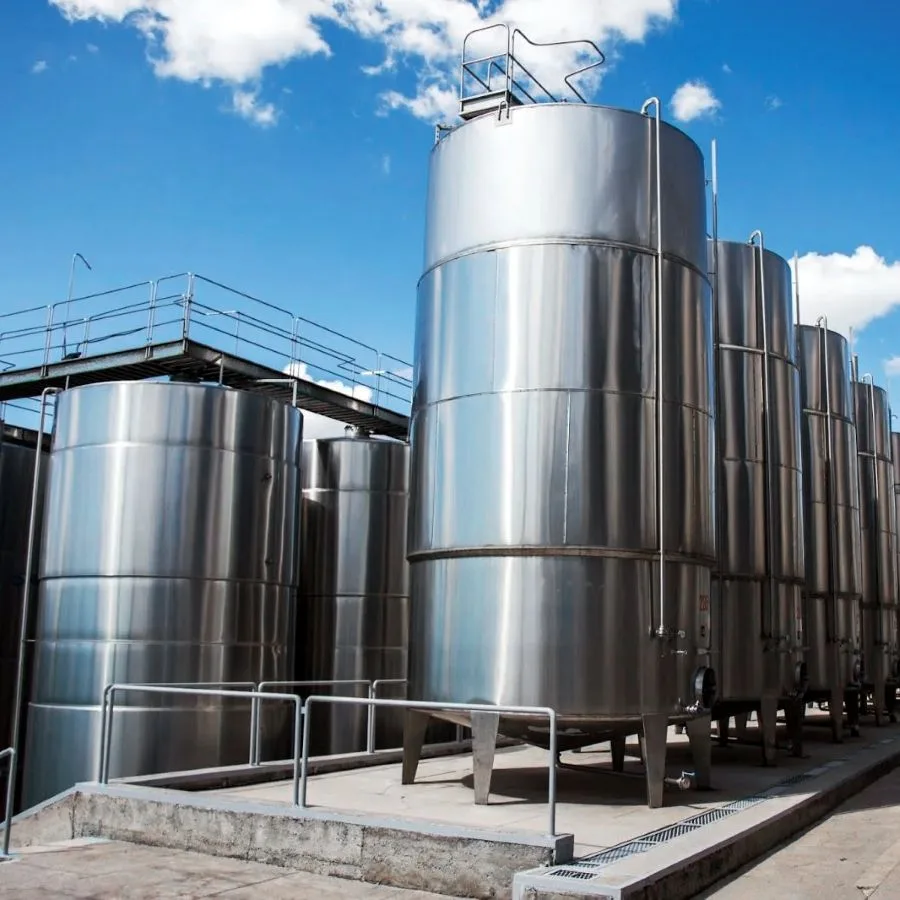
Multilayer pressure vessels
Thick-walled components
- Shells (>36 mm)
- Tube sheets & flanges
- End caps (>50 mm requiring normalization)
Critical infrastructure: - LNG storage tanks
- Nuclear reactor auxiliary systems
Mechanical Property
| Thickness mm | Yield Strength MPa | Tensile Strength MPa | Elongation % | Impact KV2 |
|---|---|---|---|---|
| 3–16 | ≥345 | 510–640 | ≥21 | ≥34J / 0°C |
| 16–36 | ≥325 | 500–630 | ≥21 | ≥41J / 0°C |
| 36–60 | ≥315 | 490–620 | ≥21 | ≥41J / 0°C |
| 60–100 | ≥305 | 490–620 | ≥20 | ≥41J / 0°C |
| 100–150 | ≥285 | 480–610 | ≥20 | ≥41J / 0°C |
Chemcial Composition
| Steel Grade | C % | Si % | Mn % | Cu % | Ni % | Cr % | Mo % | V % | Ti % | Alt % | P % | S % | Nb |
|---|---|---|---|---|---|---|---|---|---|---|---|---|---|
| Q345R | 0.20 | 0.55 | 1.2-1.7 | 0.30 | 0.30 | 0.30 | 0.08 | 0.050 | 0.030 | 0.020 | 0.025 | 0.010 | 0.050 |
Welding Guidelines
Pre- & Post-Weld Protocols:
- Preheating:
- ≤34 mm thickness: Not required
- >34 mm: Preheat to 100–150°C
- Heat Treatment:
- Mandatory stress relief at 600–640°C for normalized plates >34 mm
- Cooling method: Air-cool to 400°C, then furnace-cool
- Energy Control:
- Low-carbon plates: Small linear energy (prevents grain coarsening)
- High-carbon plates: Larger linear energy (reduces martensite-induced brittleness)
Quality Assurance
Non-Destructive Testing (NDT):
- Ultrasonic Testing (UT) Requirements:
- 30–36 mm: Grade III (partial zones)
- >36 mm: Grade II (full coverage)
- >80 mm: Enhanced UT per design specs
Documentation:
- Mandatory Certificates:
- Mill Test Certificate (MTC) with actual yield/tensile ratios
- Heat treatment records
- Impact toughness reports (Charpy V-notch)
Why Choose Q345R?
- Cost-Efficiency: 15–20% weight reduction vs. conventional steels
- Safety Compliance: Meets hydrogen-induced cracking (HIC) resistance standards
- Versatility: Adaptable to ASME SA516 Gr70 equivalency