15CrMoR Pressure Vessel Steel Plate
Overview
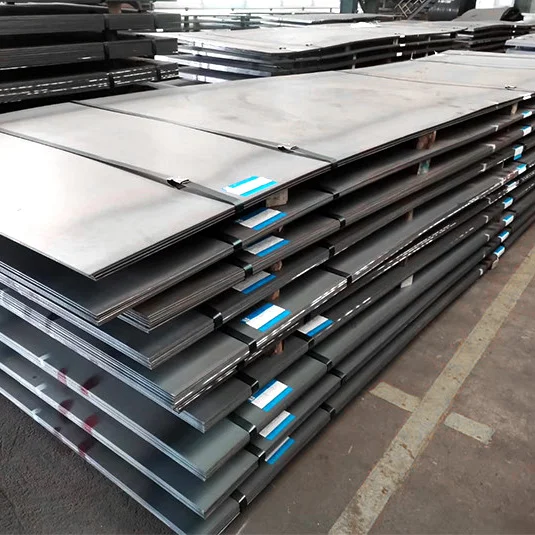
15CrMoR is a chromium-molybdenum alloy steel plate designed for pressure vessels operating in medium-temperature and hydrogen-containing environments. Compliant with GB/T 713.2-2023 (China), it combines excellent high-temperature strength, hydrogen corrosion resistance, and weldability, making it a preferred material for critical infrastructure in energy, petrochemical, and power generation industries.
Mechanical Properties
Room Temperature Performance (Normalized & Tempered State):
- Tensile Strength: 440–590 MPa
- Yield Strength:
- 6–60 mm thickness: ≥295 MPa
- 60–100 mm: ≥275 MPa
- 100–150 mm: ≥255 MPa
- Elongation: ≥19%
- Impact Toughness (Charpy V-notch, 20°C): ≥31 J
High-Temperature Performance:
| Temperature (°C) | 200 | 300 | 400 | 450 | 500 | 550 |
|---|---|---|---|---|---|---|
| Yield Strength (MPa) | 240 | 210 | 196 | 186 | 176 | 165 |
Applications
15CrMoR is widely used in:
- Petrochemical Industry:
- Hydrogenation reactors
- High-temperature heat exchangers (≤550°C)
- Catalytic cracking units
- Power Generation:
- Boiler drums (≤17 MPa pressure)
- Nuclear reactor auxiliary systems
- Coal Gasification:
- Gasifier shells
- Synthesis gas reactors
- Energy Storage:
- LNG storage tanks
- High-pressure gas cylinders
Heat Treatment & Processing
Delivery Condition: Normalized (900–930°C) + Tempered (620–680°C).
Welding Guidelines:
- Preheating: 150–200°C for thickness >25 mm.
- Recommended Electrodes: E8018-B2 (manual arc welding), ER80S-B2L (TIG/MIG).
- Post-Weld Heat Treatment: Stress relief at 620–650°C.
Critical Note: Avoid prolonged exposure to temperatures >600°C to prevent creep damage.
Quality Control & Testing
- Non-Destructive Testing (NDT):
- Ultrasonic Testing (UT): Grade II for thickness >36 mm, Grade III for 30–36 mm.
- Hardness Control: ≤225 HB in weld zones.
- Certification: Mill Test Certificates (MTC) with actual yield/tensile ratios and impact test reports.
Advantages of 15CrMoR
- Hydrogen Resistance: Minimizes hydrogen embrittlement in sour service environments.
- Cost Efficiency: Reduces material thickness by 15–20% compared to carbon steels.
- Versatility: Suitable for ASME, PED, and GOST-certified projects.