The Engineering Nuances of Steel Coil Leveling: Beyond Simple Uncoiling

Jay Zheng
Aug 15, 2025
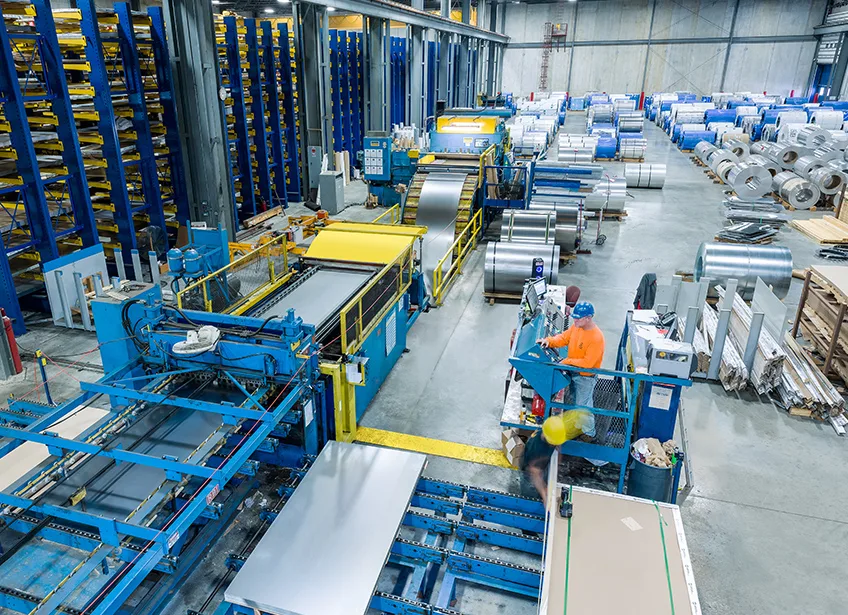
A: Isn't leveling just a large-scale cutting process? How does it differ from unrolling fabric?
B: The distinction lies in material mechanics. Fabric regains flatness when unrolled, whereas cold-rolled steel coils retain plastic deformation memory—residual stress from coiling causes continuous rebound. Leveling's core function is elastic-plastic deformation correction via straighteners, far surpassing simple cutting.
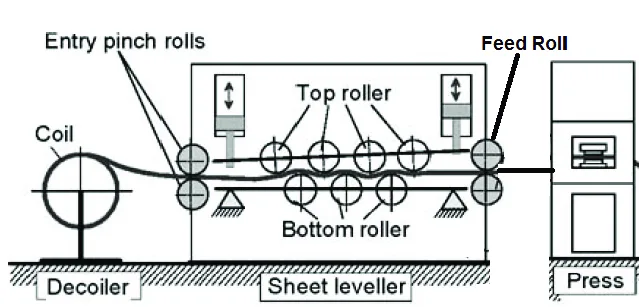
A: So it's like pressing a spring? Can repeated bending flatten it?
B: Industrial-level straightening must overcome three technical barriers:
- Curvature Gradient Complexity: Inner coil curvature can be 3× higher than outer layers. Traditional "small-deformation reverse bending" fails to adapt to continuous curvature shifts.
- 2.Three-Step Straightening Law:
- High-Deformation Uniformity: Apply 30–50% overbending force to eliminate inner/outer curvature differences
- Stepwise Pressure Reduction: Gradually release residual curvature via decreasing bend angles
- Micro-Defect Correction: Target secondary deformations with ≤0.2mm/m precision
- Roller System Evolution: Modern 11-roll systems use collective tilt control, reducing bend force by 40% with near-zero residual curvature.
A: Can adjusting two parameters control the entire line?
B: Parameter combinations have infinite solutions but divergent stability:
- Adjustment Paradox: For fixed entry reduction, 5–8 exit reduction combinations achieve flatness
- Sensitivity Threshold: Every 1mm entry reduction increase raises shape-defect risk by 22%
- Case Study: For 0.8mm HSLA steel in EV battery trays, entry reduction must stay within 2.3±0.1mm—exceeding thins thickness by 0.1mm; undershooting causes waviness
A: Is the theoretical model mature for multi-objective optimization?
B: Academic research faces five idealization traps:
- Material Variance: DP780 steel yield strength fluctuates ±8% at 20% line-speed increase
- Thinning Loss: Each pass thins material by 0.3–1.5%
- Material Inhomogeneity: ±0.05mm thickness variance within one coil
- Friction Instability: Roller temperature rise >50℃ alters friction coefficient by >15%
- Machine Frame Elasticity: 0.12mm frame deformation under 3,000-ton forces
Industry Pain Point: Automakers demand ≤15MPa residual stress post-leveling, yet AI models show 30% prediction errors—sustaining master operators' priceless intuition.
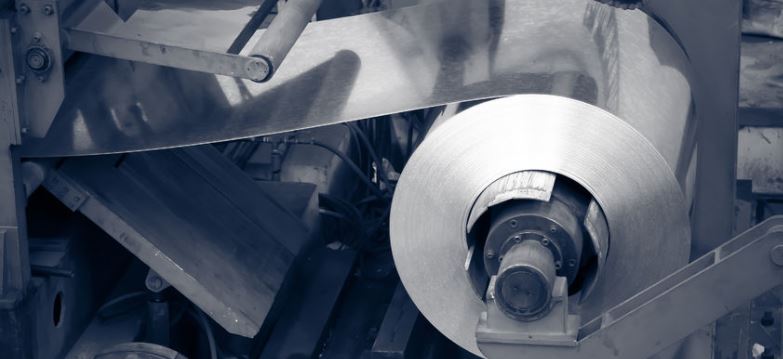
The Dual Philosophy: Precision & Adaptability
Precision Hardware:
- 9-roll straighteners with laser closed-loop control (0.15mm/m compensation)
- Diamond-coated rollers (3× wear resistance; anti-scratch protection)
Adaptive Expertise:
- Bend-rebound mapping tables from 100k+ datasets
- Philosophy shared with metal forging: anticipate material "temper" to counteract rebound
Smart Manufacturing Breakthrough
Process Efficiency Synergizer (PES) uses IoT for real-time data collection. With sensitivity-analysis algorithms, it cuts optimization time by 300%, nearing self-sensing straightening.
Baohui Steel Limited
As the one-stop steel solution provider, we has professional leveling experience and the most advaced machine. If you need coils or coil leveling, contact our technical expert for further information.